
Assisted Living Activities: Questions to Ask
Learn how assisted living activities support routines, interests, mobility, and connection, then use these tour questions to compare programs for your family.
Safe Haven Senior Advisors · Blog

Assisted living activities are more than a list of games on a monthly calendar. They can show whether a community understands residents as individuals, protects familiar routines, and creates realistic ways to connect with other people. When you tour a community, look beyond how many events are scheduled. Ask who the activities are designed for, how residents influence the calendar, and what happens when someone needs a quieter or more flexible option.
How Assisted Living Activities Support Daily Life
A strong assisted living activities program gives residents meaningful choices throughout the day. It balances group events with quiet and one-to-one options, includes interests such as music or gardening, and adapts participation for different abilities. The goal is not a packed schedule. The goal is a daily rhythm that feels familiar, purposeful, and welcoming.
The National Institute on Aging's overview of assisted living describes social and recreational activities as services that may be available in residential settings. It also emphasizes that facilities vary. That variation is why a tour should include questions about the actual program, not just a brochure's general description.
Interests and identity
A resident should not have to give up every hobby or preference after moving. One person may enjoy a current-events discussion, while another prefers watercolor, familiar music, bird-watching, puzzles, or helping set up a gathering. Ask how the team learns what a new resident enjoys and how those preferences are recorded. A useful answer describes a process, such as a conversation during move-in, an interest profile, or regular check-ins, rather than simply promising that there is something for everyone.
Look for signs that activities are connected to residents' lives. Photos from resident-led events, a display of current projects, or a calendar that names specific clubs can be more informative than a long list of generic categories. The question is whether residents have opportunities to contribute, not only whether staff have prepared entertainment.
Routine and choice
Predictability can make a new setting easier to understand, but choice keeps a routine from feeling imposed. Ask whether the calendar repeats at consistent times, how far in advance it is posted, and whether residents can choose to join, observe, or leave. Families should also ask about evenings and weekends. A schedule that looks full from Monday through Friday may not answer what happens during the rest of the week.
Ask what happens when an event is canceled. Does the community offer a backup option, or does the room simply remain empty? The answer can reveal how thoughtfully the program is managed and whether the team expects participation to matter.
Social connection without pressure
Group activities can create natural ways to meet people, but not every resident wants a crowded room or a competitive game. Ask about small groups, shared meals, conversation-based events, and opportunities for a resident to participate without being put on the spot. A resident who prefers to listen should still have a place in the social life of the community.
During a tour, notice whether staff invite residents by name and explain the activity in a respectful way. Pay attention to whether people appear comfortable asking questions or changing their minds. These small observations help a family understand the culture behind the printed calendar.
Movement and participation at different abilities
Activities should offer ways to participate safely and comfortably at different mobility levels. That may include seated movement, short walks, music, crafts, gardening at an accessible height, or an activity that can be enjoyed from the edge of the group. Ask what adaptations are available, who decides whether an activity is appropriate, and how staff respond when a resident's abilities or preferences change.
Do not assume that the word "fitness" means every resident is expected to exercise in the same way. Ask for examples of low-impact, seated, sensory, and rest-friendly options. If your loved one has specific health or mobility considerations, bring questions to the appropriate clinician as well as the community team.
What Should a Strong Assisted Living Activity Calendar Include?
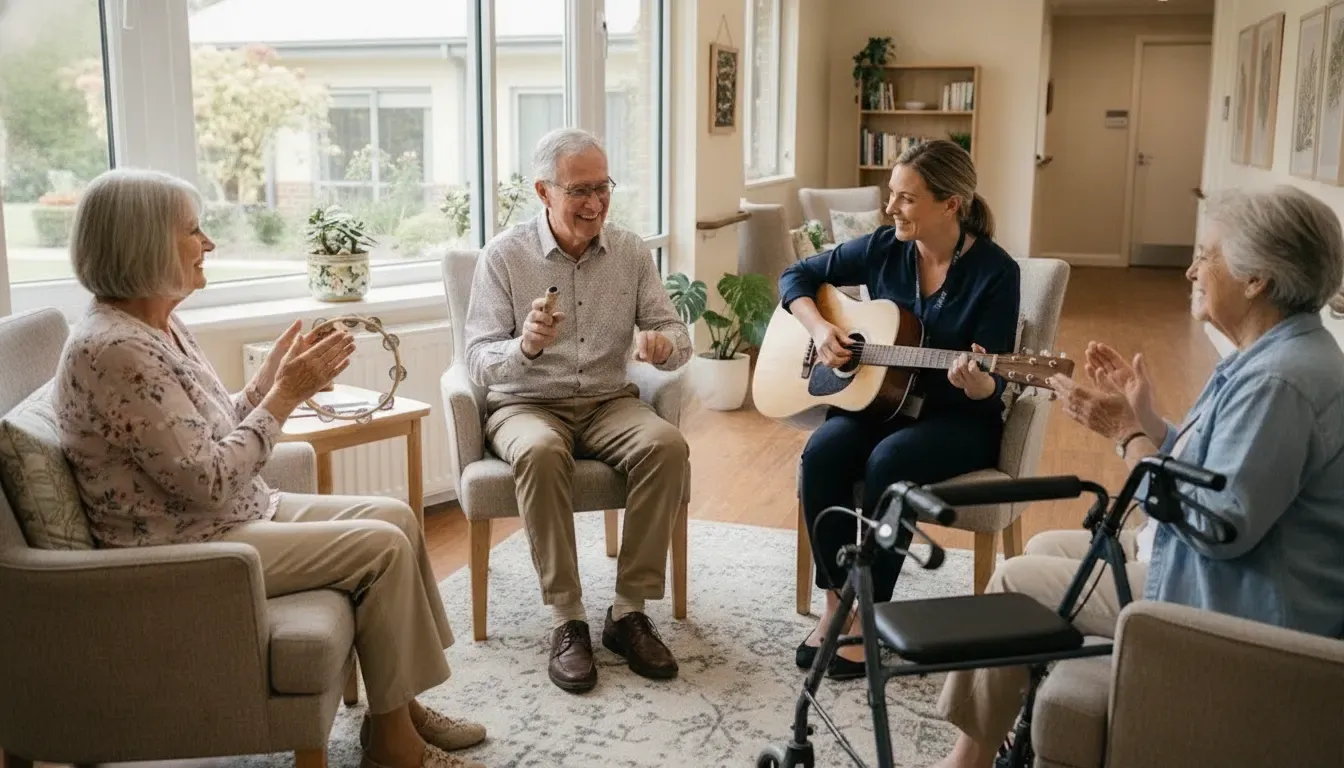
A useful assisted living activity calendar includes more than one type of event and more than one way to participate. Look for a mix of resident interests, creative and musical programs, movement, social gatherings, learning, outdoor time, and quiet or individual options. The calendar should also show when activities occur and whether residents help shape them.
No single list of activities is right for every person. Use categories as prompts, then ask how often each option happens and who typically attends. A balanced program may include:
- Creative activities: painting, crafts, seasonal projects, writing, or hands-on workshops.
- Music and performance: sing-alongs, listening groups, visiting musicians, or opportunities for residents to share a talent.
- Movement: walking groups, stretching, seated movement, or other activities adapted to the community's residents.
- Social connection: card games, book discussions, coffee groups, shared meals, and celebrations.
- Learning and curiosity: guest talks, current-events conversations, technology help, or classes built around resident interests.
- Outdoor and purpose-driven options: gardening, time in a courtyard, community outings, or projects that give residents a meaningful role.
- Quiet and one-to-one choices: conversation, music listening, reading, a personal visit, or a staff-supported activity for someone who does not want a group.
Ask to see a current calendar rather than a sample month. Then ask which events are most popular, which are resident-led, and which are offered one-to-one. If the calendar is mostly room names and broad labels, request examples. "Recreation" can mean very different things in different communities.
How Do You Compare Assisted Living Activities on a Tour?
Compare assisted living activities by connecting the calendar to your loved one's actual preferences, schedule, and abilities. Ask to see the current calendar, speak with the person who plans it, and observe a real activity if possible. Then record specific answers for each community so the final comparison is based on fit, not presentation.
Use the questions below alongside the broader assisted living tour checklist. The checklist covers care, staffing, safety, costs, and policies. This article narrows the activity questions so families can evaluate daily life without repeating the entire tour process.
| Question to ask | What to notice | Why it matters |
|---|---|---|
| Can I see the current activity calendar? | Specific times, locations, and different types of options. | A real calendar shows what is happening now, not only what the community hopes to offer. |
| How do residents share interests or suggest activities? | A clear feedback process and examples of resident input. | Resident input helps the program stay personal instead of becoming a fixed list. |
| What options are available for someone who does not enjoy large groups? | Small groups, quiet areas, visits, and one-to-one choices. | Participation should not depend on being outgoing or comfortable in a crowd. |
| How are activities adapted for different mobility or cognitive needs? | Practical examples of adaptations and respectful explanations. | The same event may need more than one way to participate. |
| What happens when a resident's interests or abilities change? | Regular check-ins and communication between the activity and care teams. | A good fit should be able to change as the resident's needs change. |
| Which activities happen in the evenings or on weekends? | Whether the schedule supports the entire week. | A family is evaluating daily life, not only weekday programming. |
| What happens if an activity is canceled? | A backup plan and communication with residents. | Reliable alternatives help preserve routine and trust. |
| Can I observe an activity while touring? | How staff invite residents, explain the activity, and respond to different levels of interest. | Observation can reveal more than a polished description. |
Ask the same questions at every community. Write down the answer, the staff member's role, and what you observed. If an answer is vague, ask for a recent example. You are not trying to grade a performance. You are trying to learn whether the program can support a life your loved one recognizes as their own.
How Can Families Match Assisted Living Activities to Personal Preferences?
Match assisted living activities to personal preferences by separating must-haves from nice-to-haves. Start with the hobbies, routines, social comfort, and abilities your loved one has today. Then ask whether each community offers realistic ways to continue those interests, try something new, and participate without pressure.
Before the tour, make a short activity profile together if your loved one can participate in the decision. Keep it concrete. Instead of writing "likes to stay busy," note the kinds of experiences that feel satisfying:
- Interests: music, crafts, reading, gardening, games, sports, faith, animals, food, travel, or local history.
- Social style: large groups, small groups, familiar one-to-one conversation, or a mix.
- Daily rhythm: early mornings, afternoons, evenings, or flexible participation.
- Participation needs: seated options, shorter sessions, visual cues, extra time, or a quieter setting.
- Meaningful roles: welcoming others, helping with a project, sharing a skill, or making a choice about the calendar.
Then sort each item into three columns: essential for a good fit, preferred if available, and not important right now. This keeps a family from rejecting a community because it lacks one favorite event while overlooking a program that consistently supports the resident's broader interests.
For families comparing Charlotte, Mecklenburg County, Union County, or York County options, the activity program should be considered alongside care needs, location, staffing, and the agreement's costs. You can begin with Safe Haven's overview of Charlotte assisted living options, then use tours to test whether a community's daily life matches your family's priorities.
Build a focused shortlist of communities to tour based on activities, care, and daily fit
Frequently Asked Questions About Assisted Living Activities
What are common activities in assisted living?
Common options may include creative projects, music, games, book or conversation groups, movement, gardening, outings, celebrations, learning, and quiet one-to-one activities. The important question is not whether a community can name many options. Ask how often they occur, who participates, and how residents help shape the calendar.
How can families tell whether an activity program is meaningful?
Ask to see the current calendar, observe a program, and speak with residents or the person who plans activities. Look for specific examples of resident input, different participation levels, and backup plans when events change. A program feels meaningful when it connects with residents' interests and daily routines rather than filling time with the same activity for everyone.
Are assisted living activities adapted for different abilities?
They should offer practical ways for residents with different mobility, hearing, vision, or cognitive needs to participate, but the details vary by community. Ask what adaptations are available, who evaluates them, and how the team communicates changes. For individual health questions, involve the appropriate clinician rather than relying on a general activity description.
What if my parent does not enjoy group activities?
Ask about small groups, quiet spaces, personal visits, independent projects, and activities that can be enjoyed by watching or joining for only part of the time. A community should be able to describe more than one path to connection. Your parent does not need to enjoy every event for a program to be a good fit.
Should activities determine which assisted living community we choose?
Activities should be one part of the decision, considered with care fit, staffing, safety, location, costs, and the resident's preferences. They can be a useful window into the community's culture and daily rhythm. Use the same questions at each tour, compare specific answers, and choose the setting that fits the whole person.
Get free help comparing assisted living communities and scheduling community tours.